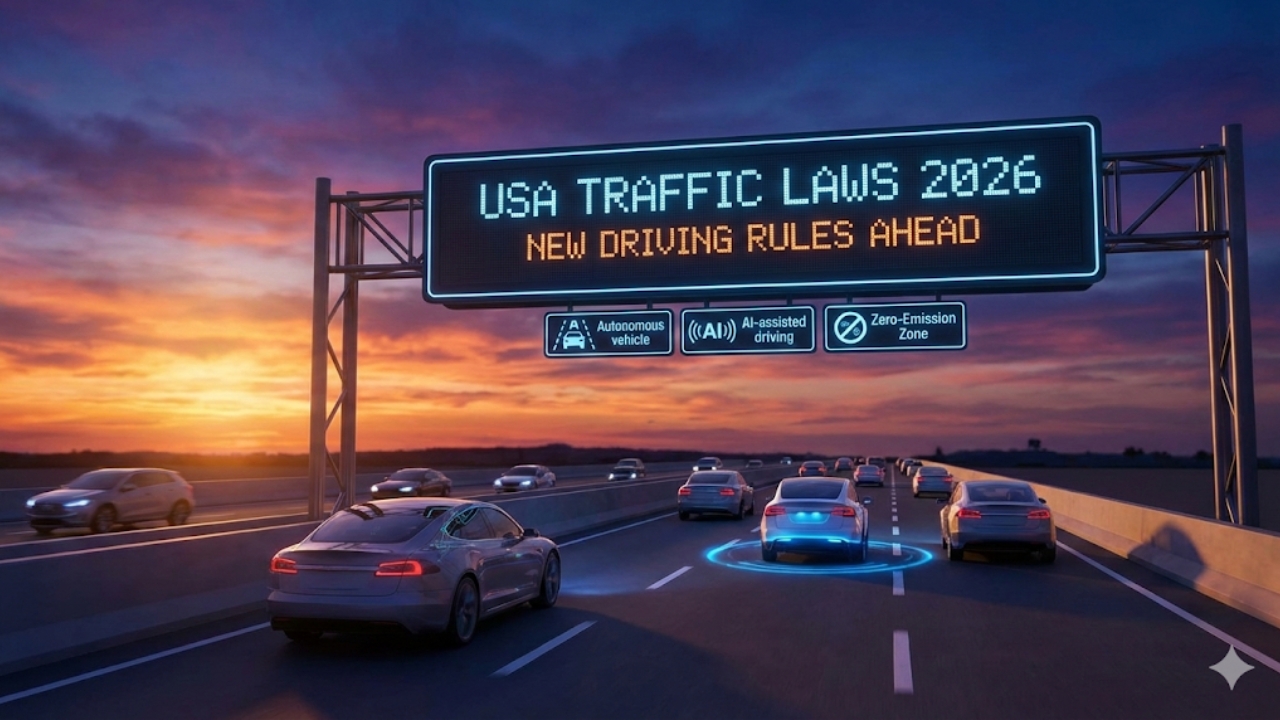
Road safety remains a top priority across the United States as states roll out updated traffic regulations in 2026. These changes aim to curb distracted driving, protect vulnerable road users, and leverage technology for better enforcement. Drivers who stay informed can avoid hefty fines, license points, and potential accidents while contributing to safer highways.
Hands-Free Driving Mandates
More states now ban all handheld phone use behind the wheel, expanding beyond texting to include calls and navigation apps. Repeat offenders face doubled fines starting at $200, plus license suspension after three violations in a year. This shift reflects data showing distracted driving causes over 3,000 deaths annually, pushing lawmakers to enforce stricter compliance through roadside checks and apps that detect phone activity.
Expanded Move-Over Laws
The “Move Over or Slow Down” rule now applies to a broader range of roadside vehicles, including tow trucks, maintenance crews, and any car with hazard lights on. Drivers must change lanes or reduce speed by 25 mph when approaching these stops, with fines up to $1,000 for non-compliance in most states. California, for instance, broadened this via AB 390 to cover all stationary vehicles, reducing risks for roadside workers.
Left-Lane and Speed Enforcement
Lingering in the left lane for passing only now triggers tickets in 30 states, with penalties from $100 to $300 for blocking traffic. Work zones and school areas see doubled fines and lower limits—school zones drop to 20 mph in some places by late 2026. Automated speed cameras in construction areas catch average speeds over limits, issuing mailed citations without stops.
| New 2026 Traffic Violation | Typical Fine Range | States Most Affected | Enforcement Method |
|---|---|---|---|
| Handheld Phone Use | $100–$500 | CA, NY, TX, FL | Police Stops, Cameras |
| Move-Over Violation | $200–$1,000 | Nationwide Expansion | Visual Checks |
| Left-Lane Camping | $100–$300 | 30+ States | Highway Patrol |
| School Zone Speeding | $250–$800 (Double) | CA, IL, PA | Cameras, Radar |
| Average Speed Zones | $300–$800 | High-Risk Roads | Tech Monitoring |
Automated Enforcement Surge
Red-light and speed cameras proliferate on busy intersections, with some activating at just 5 mph over the limit. New average-speed zones calculate violations over stretches of road, fining based on sustained excess rather than snapshots—penalties start at $300. Cell phone detection cameras scan for handheld use, sending tickets by mail and raising insurance rates automatically.
Impaired Driving Updates
DUI thresholds tighten to 0.05% BAC in several states when combined with cannabis or medications, with implied consent laws mandating tests or facing 90-day suspensions. Refusals now carry criminal charges in 20 states, up from civil penalties. These rules target poly-substance impairment, as crashes involving drugs rose 15% last year.
Pedestrian and Cyclist Protections
Drivers must yield 3–8 feet when passing bikes, and right-on-red turns require full stops at crosswalks. Cities add buffer zones near sidewalks, with fines doubling to $500 for close passes. EV drivers face HOV lane restrictions unless solo exemptions apply, plus new registration fees of $100–$200 annually to fund roads.
Tech and Insurance Shifts
Digital driver’s licenses gain acceptance in 15 states, but physical cards remain essential for interstate travel. Vehicles need event data recorders compliant with federal standards for crash probes, holding drivers accountable even in semi-autonomous modes. Real-time insurance verification via plate scanners flags uninsured drivers on the spot.
EV and Emissions Rules
Electric vehicle owners pay road-use fees up to $250 yearly in 25 states, offsetting gas taxes. Emissions testing expands to hybrids, with non-compliant vehicles barred from registration. Public charger etiquette laws prevent hogging spots, with $50 tow fees for overstays.
FAQs
Q: Do all states have hands-free laws in 2026?
A: No, but over 30 do; check your DMV for local rules.
Q: What if I get a camera ticket?
A: Pay promptly or contest with evidence like insurance proof.
Q: Are digital licenses valid everywhere?
A: Mostly in-state; carry physical backups for travel.
Disclaimer
The content is intended for informational purposes only. You can check the official sources; our aim is to provide accurate information to all users.