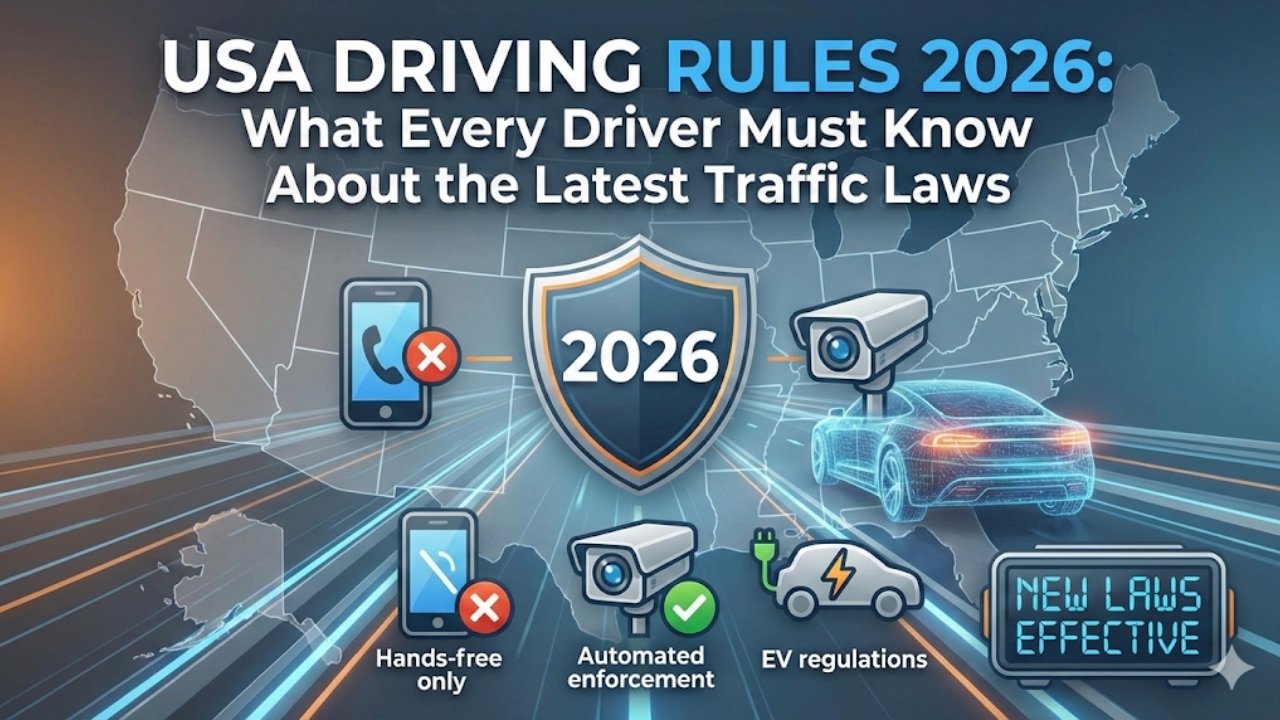
Navigating America’s roads in 2026 demands staying ahead of evolving traffic regulations. With federal guidelines blending state-specific updates, drivers face stricter enforcement on distractions, emissions, and automated monitoring. These changes prioritize safety amid rising vehicle automation and urban congestion.
Hands-Free Phone Mandates
A nationwide push for hands-free cell phone use took full effect early this year. Drivers can no longer touch their devices, even at stops, in over 30 states including California and Pennsylvania. Violators risk fines starting at $100, doubling in school zones, with repeat offenses threatening license points. This “touch rule” stems from data showing distracted driving causes one in five crashes.
Speed and Camera Enforcement Surge
Average speed monitoring zones now dot highways in major states like Texas and New York. Unlike spot checks, these calculate speeds over miles using overhead tech, issuing tickets automatically for exceeding limits by 10%. Red-light and cell phone detection cameras expanded too, capturing evidence without officer presence. Fines climb to $300 or more, often hiking insurance rates by 20%.
Key 2026 Rule Changes Overview
| Rule Category | Major States Affected | Minimum Fine | Key Enforcement Method |
|---|---|---|---|
| Hands-Free Phones | CA, PA, LA, TX (31 total) | $100 | Touch detection cameras |
| Speed Monitoring | NY, TX, FL | $150 | Average speed zones |
| Insurance Verification | Nationwide rollout | $500 | Real-time plate scanners |
| Emissions Compliance | CA, NY | $250 | OBD-II event recorders |
| DUI Thresholds | All states | License suspension | Lower BAC limits (0.05%) |
| EV Registration Fees | CA, WA | $100 annual | Annual mileage tax |
| Slow Down Move Over | CA expanded | $250 | Highway patrol apps |
This table highlights core shifts, helping drivers prioritize compliance across regions.
Insurance and Emissions Crackdowns
Real-time insurance verification scanners at tolls and borders now flag uninsured vehicles instantly. Penalties include $500 fines plus registration holds until proof uploads digitally. Emissions rules tightened too, mandating event data recorders in most cars for OBD-II checks. Non-compliant vehicles face impoundment, especially diesels in smog-prone areas like Los Angeles.
DUI and Reckless Penalties Rise
Blood alcohol limits dropped to 0.05% in all states, aligning with global safety benchmarks. First-time offenders lose licenses for 90 days minimum, paired with interlock devices costing $100 monthly. Reckless driving, including aggressive lane changes, draws $1,000 fines and jail time up to 30 days. School zone speeds fell to 20 mph in select cities by late 2026.
EV and Alternative Vehicle Fees
Electric vehicle owners now pay mileage-based fees replacing gas taxes, averaging $100 yearly in states like California and Washington. Hybrids qualify for partial exemptions but must report odometer data annually via apps. These funds repair crumbling infrastructure strained by heavier EVs, with non-payers risking plate seizures.
License Renewal and Senior Rules
Renewals demand vision tests and online driving records reviews every five years. Seniors over 70 face cognitive quizzes in high-risk states. Obscured plates—via covers or dirt—carry $1,000 fines and up to a year in jail federally. “Slow Down, Move Over” laws expanded to all hazard vehicles, cutting roadside deaths by 15% already.
Preparation Steps for Drivers
Update your app for state DMV alerts, install dash cams for disputes, and audit insurance digitally. Practice hands-free navigation and map speed zones via GPS overlays. Regular vehicle checks catch emissions issues early, saving thousands in towing fees.
FAQs
Q: Are hands-free laws uniform nationwide?
A: No, but 31 states enforce strict no-touch rules; check your DMV app.
Q: What if I get a camera ticket I dispute?
A: Appeal online within 30 days with photo evidence; many waive fees.
Q: Do EVs pay road taxes now?
A: Yes, via annual fees based on miles driven in most states.
Disclaimer
The content is intended for informational purposes only. You can check official sources; our aim is to provide accurate information to all users.