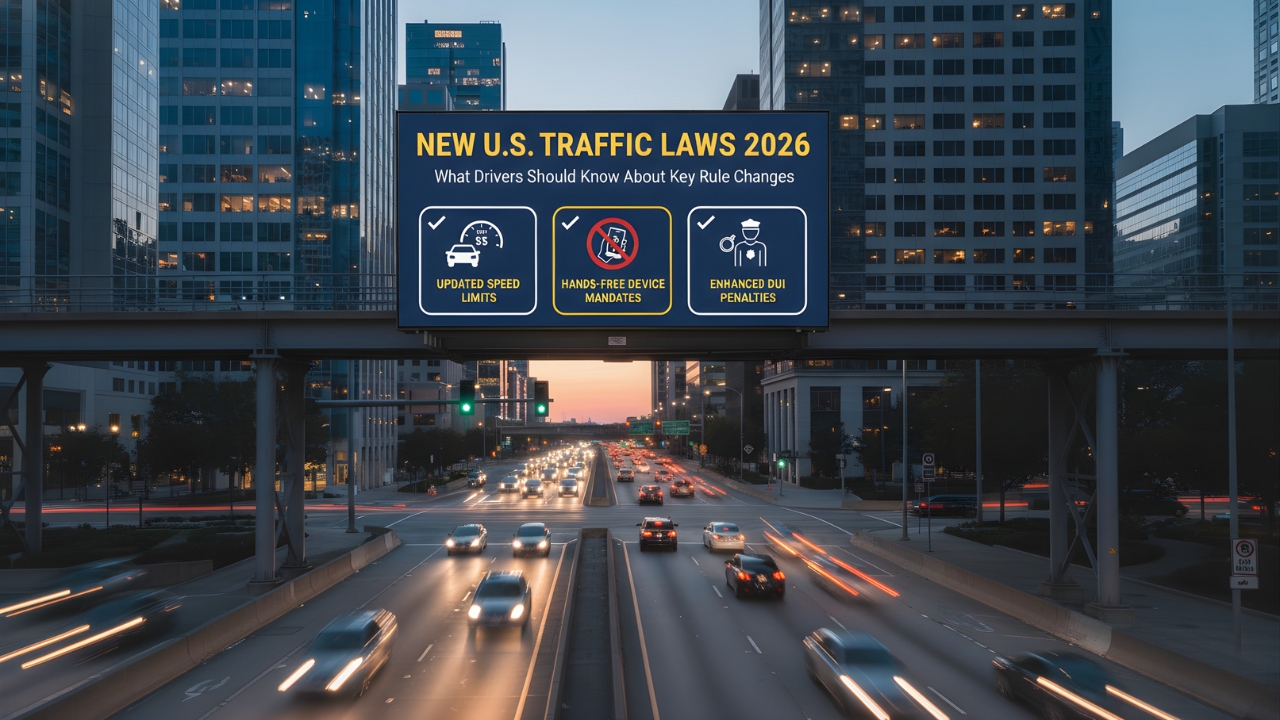
In the year 2026, the change in road traffic laws is sweeping across the United States as drivers grapple with a deluge of major changes targeting the utilization of technology in minimizing the number of fatalities on the roadways. Although certain of these changes are required by the government at the federal level in regard to the equipment of the vehicles, the state level experiences the most direct consequences, with increased enforcement of distracted driving and the fast-growing use of automated monitoring systems. Since the revamped point system in New York to the addition of the so-called Move Over in California, it now takes both the usual safety and the newest digital conscience to keep up with the new law.
Stern Penalties: The Death of Hands-Free Grace Periods
By the year 2026, the era of mobile phone precautions will be largely over. The majority of states have passed the legislation of primary enforcement of distracted driving, which means that the police can stop you simply because you are holding a gadget, no other offense is required. Penalties have increased dramatically in most of the jurisdictions, and some states have fines of over half a year on the first offence. This has become almost a universal standard in the law, requiring the driver to use voice commands or in-built vehicles only. A phone is even an offense of citation to hold at a red light in most of the U.S. territories.
The 2026 NY Driver Point System Reform
New York has one of the most aggressive revisions of the point system that has been in decades that has been implemented effective February 16, 2026. The license suspension review limit has been reduced to 10 points down to 11 points and the look-back has been extended to 24 months up to 18 months. Moreover, some of the violations which did not have any points now affect your record:
- DUI/DWI: is now 11-point (autosome review of suspension).
- Reckless Driving: 5 to 8 points.
- Speeding in Work Zones: This has been reduced to 8 points irrespective of the speed.
California Expanded Slaw Down, Move Over Law
California has greatly expanded its roadside assistance to the workers and motorists in need. Drivers must legally stop or shift lanes on the stationary vehicle on which hazard lights or warning signals are displayed as of January 1, 2026. Emergency and utility vehicles were the main subject of this rule before. This reform is done to ensure protection of the disabled motorists and tow operators, and a fine can be up to 1,000 dollars in case of non-compliance. To protect the lives of pedestrians, several California cities have also been granted the power to reduce the speed on school zones to 20 mph.
Speed and Red-Light Cameras: Automated Policing
The year 2026 is a turning point in terms of the enforcement of traffic laws and there will be a huge influx of automated enforcement. The state of Illinois, Florida, and North Carolina are leading the way in expanding AI-enhanced speed cameras in the so-called vulnerable areas, i.e., school corridors and busy construction sites. These automated citations are usually sent to the vehicle owner unlike the traditional tickets. These violations, created by cameras are now being reported to insurance companies in a number of states, having a direct effect on the monthly premiums and risk profile of drivers.
AV Responsibility and Vehicle Tech Requirement
At the federal level, the NHTSA is heading towards making Automatic Emergency Braking (AEB) a standard feature in new vehicles. 2026 is also a possible regulatory dawn of autonomous vehicles (AVs). Other states such as California have enacted new legislation to ensure that AV manufacturers equip their vehicles with two-way communication gadgets to enable first responders to reach out to remote operators in case of accidents. Also under discussion in Congress (including the SELF-DRIVE Act) is the development of a national regulatory framework, to ensure a consistent set of safety regulations, to be used to replace the existing hodgepodge of state AV regulations.
Traffic Enforcement Snapshot 2026
| Category | Major Change | Impact |
| Distracted Driving | Primary Enforcement | Fines up to $500+; Points added |
| NY Point System | 10 Points / 24 Months | Faster license suspensions |
| Move Over Laws | Includes all hazard lights | Stricter “lane change” requirements |
| Speed Cameras | Expanded to School/Work Zones | Automated tickets to vehicle owners |
Frequently asked questions (FAQs)
1. Will I be dragged in 2026 just because I am holding my phone?
Yes. The distracted driving is currently being enforced by most states in primary enforcement where the police can stop you based on the use of a handheld device alone without any other cause.
2. Will automated camera tickets have an impact on my insurance in 2026?
In more states, there is automated violation of speed and red light through which a speeding and red light are now being reported to insurance carrier and they can be added to your driving record.
3. Is the $1000 fine on license plate covers applicable all over?
Although fines depend on the state, some such as the state of California and New York have come up with heavy penalties (up to a thousand dollars) to any covers or sprays that are intended to avoid the automatic toll/speed cameras.
Disclaimer
It is informational and the material can be verified with the officially published sources at the National Highway Traffic Safety Administration (NHTSA) or the New York DMV we prefer to keep all the users informed.