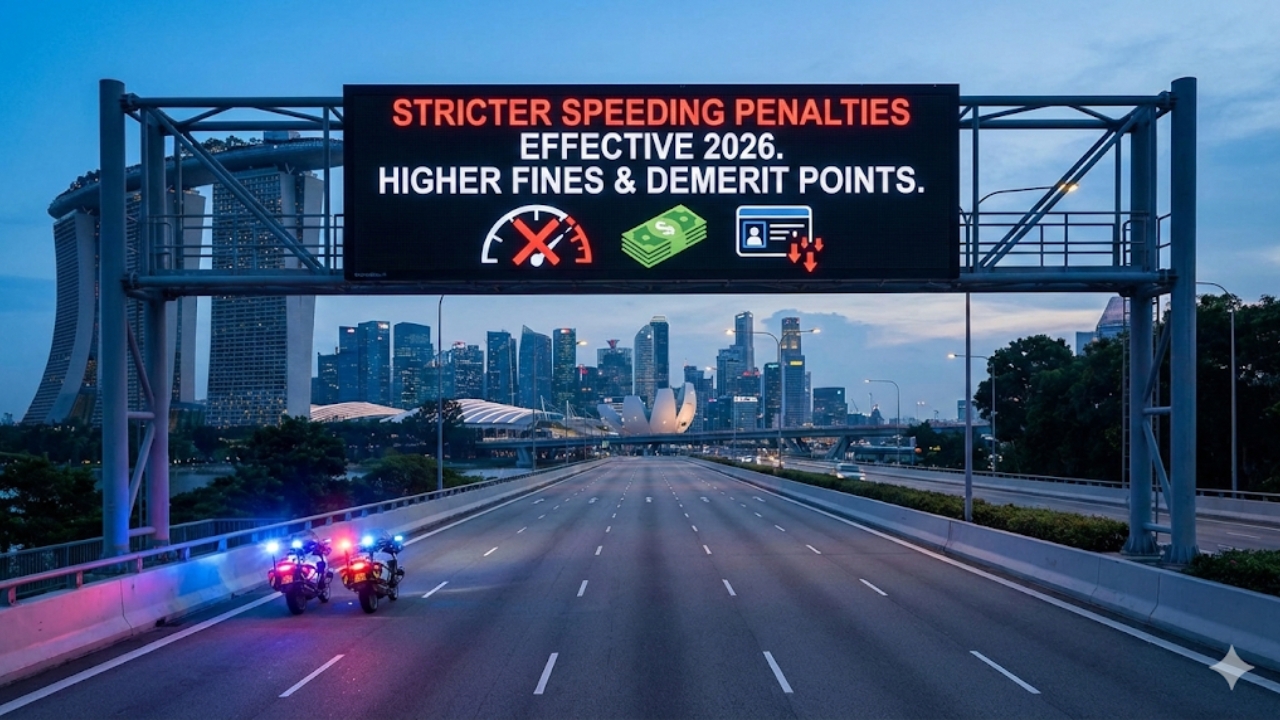
Singapore is ramping up its crackdown on speeding with tougher rules starting January 1, 2026. Drivers face steeper fines and more demerit points to cut down on reckless habits behind the wheel.
New Penalty Framework
The changes target every level of speeding, making consequences hit harder right from minor slips. Exceeding limits by 1-20 km/h now draws six demerit points instead of four, paired with fines jumping to S$200 or S$250 based on vehicle class. This shift aims to make even small excesses feel the weight, pushing motorists toward steadier paces.
Why the Tougher Stance?
Speeding has surged alarmingly, with 192,000 cases in 2024—a 10-year peak and 64% jump from 2023. Over five years, road deaths and injuries climbed, often linked to fast driving that leaves no room for reaction. Authorities see these penalties as a direct fix to restore order on busy streets.
Penalty Breakdown Table
Here’s a clear view of old versus new penalties for light vehicles, showing demerit points and typical fines.
| Excess Speed (km/h) | Old Demerit Points | New Demerit Points | Old Fine (S$) | New Fine (S$) |
|---|---|---|---|---|
| 1-20 | 4 | 6 | 150-200 | 200-250 |
| 21-30 | 6 | 9 | 180-250 | 250-300 |
| 31-40 | 9 | 12 | 200-300 | 300-400 |
| 41-50 | 12 | 18 | Court | Court |
| 51-60 | 18 | 24* | Court | Court |
| >60 | 24* | 24* | Court | Court |
Impact on Everyday Drivers
For the average commuter, this means rethinking that quick dash through yellow lights or school zones. A single slip over 20 km/h could rack up nine points, nearing the 24-point suspension threshold fast if repeated. Heavy vehicle operators, like truckers, face identical point hikes but slightly adjusted fines, ensuring no one escapes the net.
Enforcement and Tech Boost
Police will lean on cameras and radars more aggressively, with no grace period post-2025. Public campaigns rolled out late last year to spread the word, giving drivers time to adjust. Experts predict fewer violations as the fear of points—tied to insurance hikes and job risks—sinks in.
Road Safety Gains Expected
These measures build on Singapore’s strong safety record, where strict laws keep fatality rates low globally. By deterring speeders, officials hope to slash accident severity, especially on expressways packed with daily traffic. Early data from pilot awareness drives shows some already slowing down.
Preparing for Compliance
Brush up on limits—urban roads cap at 50 km/h, expressways at 90-110 km/h—and invest in cruise control gadgets. Apps tracking real-time speeds can help too. Staying vigilant not only dodges penalties but protects lives in a city where roads demand precision.
Broader Implications
Beyond fines, accumulated points affect renewals and employment for delivery pros or taxi drivers. Insurers may hike premiums for repeat offenders, rippling into wallets long-term. This holistic push underscores Singapore’s zero-tolerance for risks that endanger others.
FAQs
When do the new speeding rules start?
January 1, 2026—current penalties apply through 2025.
What happens at 24 demerit points?
License suspension for 24 months.
Do fines differ by vehicle type?
Yes, heavy vehicles pay S$50-100 more in some bands.
Disclaimer
The content is intended for informational purposes only. You can check the official sources; our aim is to provide accurate information to all users.