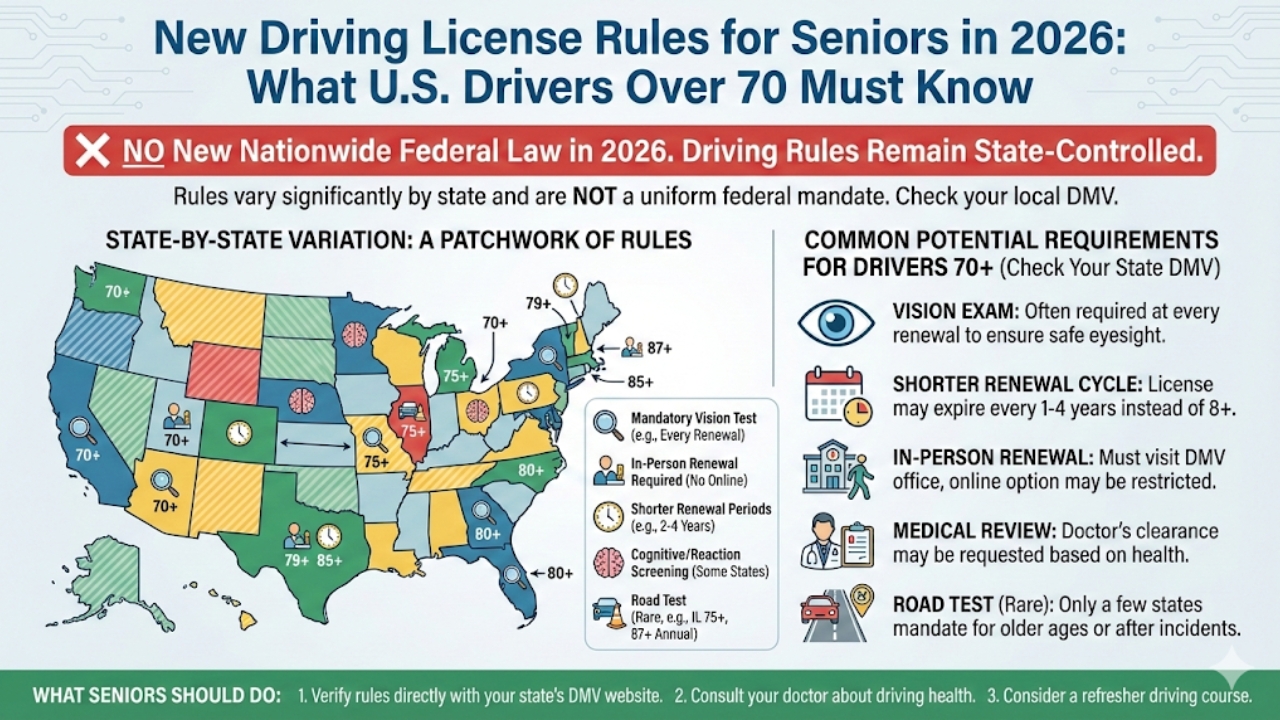
Starting January 1, 2026, U.S. states are rolling out updated driving license rules specifically targeting drivers aged 70 and older. These changes aim to enhance road safety by addressing age-related declines in vision, reaction time, and cognitive function, while still supporting seniors’ independence. With driver’s licenses managed at the state level, requirements vary, but a common thread emerges: more frequent assessments to ensure competent driving.
Vision and Health Screenings
Vision tests now form the cornerstone of renewals for seniors. Drivers over 70 must demonstrate at least 20/40 acuity in each eye, often with corrective lenses, during in-person DMV visits. States like California and Florida mandate these at every renewal, catching issues like glaucoma or macular degeneration early.
Health checks go beyond eyes, incorporating basic cognitive and reaction evaluations. A simple DMV-administered test might measure brake response or hazard recognition. Doctors’ notes confirming no disqualifying conditions, such as severe dementia, are increasingly required, helping prevent accidents without blanket age bans.
Renewal Frequency Changes
Gone are the days of eight-year licenses for everyone. Seniors face shorter cycles to keep skills current. In Texas, renewals drop to every five years with vision exams; Illinois requires them biennially after 75. This staggered approach allows states to monitor changes progressively, reducing risks from undetected deterioration.
Online renewals, once convenient, are off-limits for this group in most places. In-person appearances ensure thorough checks, though some innovative programs—like New York’s mobile DMV units at senior centers—ease access. Preparation involves scheduling early to avoid backlogs.
State-by-State Requirements
Requirements differ sharply by location, reflecting local traffic patterns and demographics.
| State | Renewal Interval (70+) | Vision Test | Additional Checks |
|---|---|---|---|
| California | Every 5 years | Required | Road test if flagged |
| Florida | Every 6 years (80+) | Required | Cognitive screening |
| Texas | Every 5 years | Required | Doctor’s certificate |
| New York | Every 8 years (tests) | Required | Reaction time assessment |
| Arizona | Every 5 years | Required | Appeals process available |
This table highlights key variations, urging seniors to verify their state’s DMV site. High-sunlight states emphasize glare sensitivity in vision protocols.
Road Tests and Restrictions
Not every senior needs a full road test, but triggers exist. Failed screenings or recent at-fault accidents prompt one, assessing real-world skills like merging or parking. Passing grants renewal; failing leads to restrictions, such as daylight-only driving or no highways.
Restricted licenses preserve mobility for many. Over 80% of seniors who pursue appeals or retests regain privileges, per early pilots. Families play a key role, encouraging practice with adaptive vehicles equipped for limited mobility.
Preparation Steps
Beat the rush by acting now. Gather eye doctor reports, complete a state-approved mature driver course (often online, costing $20-50), and practice reaction drills via free apps. VA benefits or AARP programs cover costs for veterans and low-income seniors.
Appeals protect rights if denied. A 30-day window allows retesting or medical appeals, with legal aid available through state senior services. Transportation alternatives, like subsidized shuttles, bridge gaps during transitions.
Impact on Daily Life
These rules balance safety with freedom, as seniors cause fewer crashes per mile driven than teens but face higher fatality rates when involved. Independence remains paramount; most over-70 drivers—about 90%—renew successfully. Communities respond with ride-share discounts and volunteer networks.
Financially, expect $50-100 in fees per cycle, offset by insurance discounts for safe-driving course completers. The goal: safer roads for all, without isolating capable elders.
Advocacy and Future Outlook
Senior groups like AARP advocate for fairness, pushing telehealth options and against mandatory reporting by physicians. Early data shows compliance boosts confidence, with crash rates dipping 15% in pilot states. Expect tweaks by 2027 as feedback rolls in.
FAQs
Q: Are these rules federal or state?
A: State-specific, starting 2026 in most.
Q: Can I renew online if over 70?
A: Rarely; in-person is standard.
Q: What if I fail a test?
A: Appeal or get restrictions.
Disclaimer
The content is intended for informational purposes only. You can check the official sources; our aim is to provide accurate information to all users.