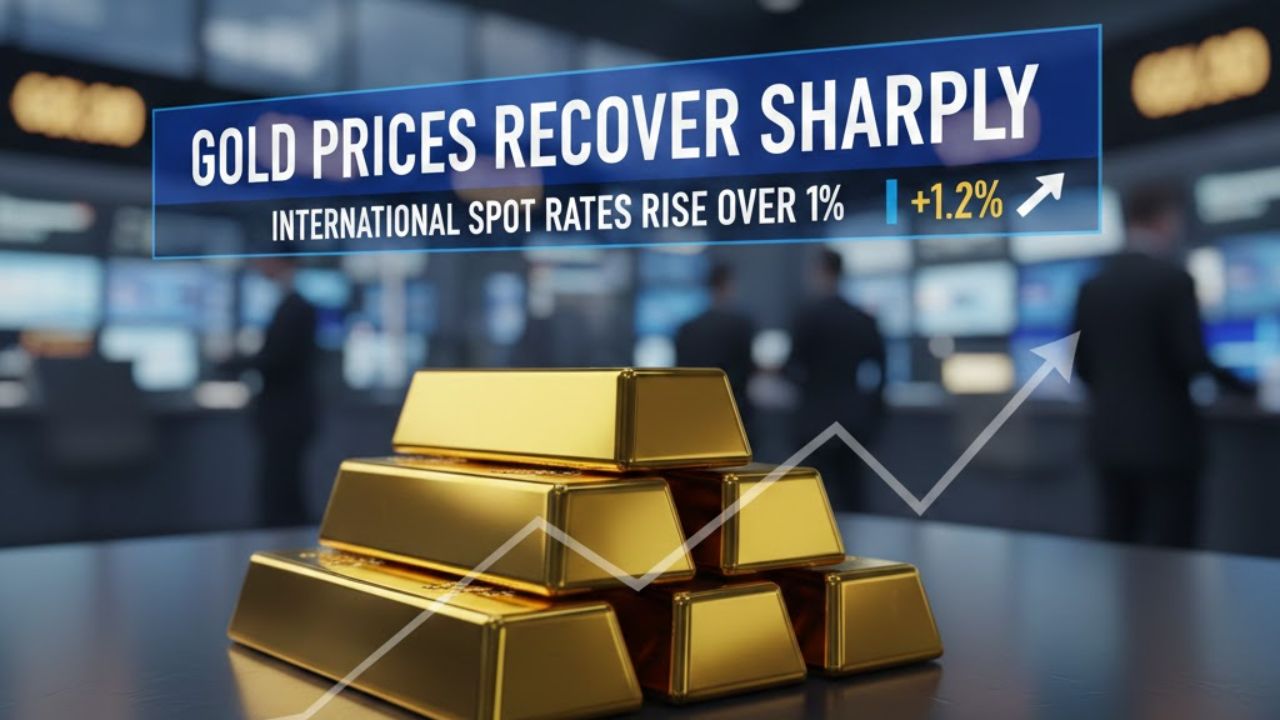
The global bullion market has witnessed a dramatic shift in momentum as international gold spot rates surged by over 1%, signaling a sharp recovery from the recent technical correction. After a period of intense selling pressure that saw the precious metal retreat from its historical peaks, investors have returned to the fray, driven by a combination of geopolitical jitters and a strategic “buy the dip” mentality. This rebound highlights the enduring appeal of gold as a sanctuary for capital during times of macroeconomic uncertainty.
Historically, gold has served as a barometer for global stability. The recent price action, characterized by a swift bounce-back, suggests that the underlying bullish sentiment remains intact despite the volatility seen earlier in the week. Analysts point out that while the market experienced a “flush out” of speculative long positions, the core drivers—central bank accumulation and inflationary hedges—continue to provide a robust floor for prices.
Factors Fueling the Bullion Rebound
The primary catalyst for the current recovery is the reigniting of safe-haven demand. Recent escalations in the Middle East, specifically involving naval frictions in the Arabian Sea, have reminded market participants of the fragility of the current geopolitical climate. When traditional assets like equities or currencies face heightened risk, institutional and retail investors instinctively rotate toward hard assets. Gold, being a non-yielding asset, becomes particularly attractive when the risk-reward ratio of other investments begins to tilt toward the downside.
Another significant factor is the softening of the US dollar. After a brief period of dominance following the nomination of a more hawkish Federal Reserve leadership, the greenback has stabilized, giving breathing room to dollar-denominated commodities. A weaker dollar makes gold more affordable for international buyers, further stimulating demand in major consuming hubs like India and China. This currency dynamic, coupled with the anticipation of future monetary policy shifts, has created a fertile ground for the current price appreciation.
Comparative Gold Rates Snapshot (February 2026)
| Category | Spot Rate (USD/oz) | Domestic Rate (INR/10g) | Daily Change (%) |
| International Spot Gold | $5,044.74 | N/A | +1.15% |
| 24K Gold (99.9% Purity) | N/A | ₹1,53,700 | +0.85% |
| 22K Gold (91.6% Purity) | N/A | ₹1,40,890 | +0.72% |
| MCX Gold Futures (April) | N/A | ₹1,52,071 | +1.20% |
Central Bank Accumulation and the “De-Dollarization” Trend
One of the most profound structural shifts in the 2026 gold market is the aggressive stance of global central banks. Nations such as India, China, and Turkey have significantly increased their gold reserves as part of a broader strategy to diversify away from the US dollar. This “de-dollarization” trend is not merely a reactionary move to current events but a long-term strategic pivot. By increasing the gold component of their foreign exchange reserves, these institutions are creating a permanent layer of demand that absorbs market shocks.
In India, the Reserve Bank has been notably active, with reports indicating that gold holdings now account for a substantial portion of the nation’s total reserves. This official sector buying acts as a powerful psychological signal to retail investors. When the “big money” shows a commitment to holding physical bullion, it reinforces the narrative that gold is a necessary component of a diversified portfolio, regardless of short-term price fluctuations.
Technical Analysis and Key Resistance Levels
From a technical perspective, the sharp recovery of over 1% has allowed gold to reclaim critical psychological levels. After slipping toward the $4,500 zone during the recent “meltdown,” the metal has swiftly moved back toward the $5,000 mark. Market technicians are closely watching the $5,100 and $5,220 resistance zones. A sustained close above these levels could open the gates for a retest of the all-time highs reached earlier in the year.
Conversely, the recent lows are now being viewed as a “hard floor.” The speed at which the market rebounded suggests that there is a massive amount of “patient capital” waiting on the sidelines to enter at lower valuations. This creates a “zigzag” pattern of price discovery, where each significant dip is met with aggressive buying, effectively preventing a full-scale bear market from taking hold.
Impact of Trade Policies and Local Taxes
The domestic gold price in India remains uniquely influenced by local factors, including the 2026 Union Budget and changes in import duties. Recent trade discussions between the United States and India, which led to a reduction in reciprocal tariffs, have buoyed overall market sentiment. While international rates set the benchmark, local premiums often fluctuate based on the physical demand-supply gap during the wedding and festival seasons.
Furthermore, the difference in pricing across major Indian metros—such as the slight premium seen in Chennai compared to Mumbai—is a result of varying local taxes and logistical costs. However, the overarching trend remains synchronized with the international spot market. As global rates rise, Indian consumers are adjusting to a new normal where gold is priced significantly higher than in previous decades, yet its cultural and financial significance remains undiminished.
Strategic Outlook for Gold Investors
Looking ahead, the consensus among analysts is one of “cautious optimism.” While the path to $6,000 per ounce may be fraught with volatility, the fundamental pillars of the bull market remain unshaken. Investors are advised to look past the daily noise of the 1% or 2% swings and focus on the broader macroeconomic landscape. Persistent inflation, geopolitical instability, and central bank demand are the three engines driving this rally.
For the retail investor, the current recovery serves as a reminder of the importance of timing and patience. Jumping into a “euphoric” rally can be risky, but the recent correction provided a healthier entry point for those looking to build long-term positions. As the market continues to digest new economic data, gold’s status as the ultimate hedge remains its most compelling attribute.
FAQs
Q1. Why did gold prices recover so quickly after the recent fall?
The recovery was primarily driven by “value buying” after the metal became technically oversold. Additionally, renewed geopolitical tensions in the Middle East and a stabilizing US dollar encouraged investors to return to safe-haven assets.
Q2. Is $5,000 a sustainable level for international spot gold?
Many analysts believe that $5,000 is now a crucial psychological support level. As long as central banks continue to buy bullion and global economic uncertainty persists, gold is expected to maintain its position around or above this mark.
Q3. How do international rates affect the price of gold in India?
India imports the majority of its gold, so domestic prices are directly linked to international spot rates. When the global price rises by 1%, domestic rates typically follow suit, adjusted for the USD-INR exchange rate and local import duties.
Disclaimer:
The content is intended for informational purposes only. You can check the official sources; our aim is to provide accurate information to all users.