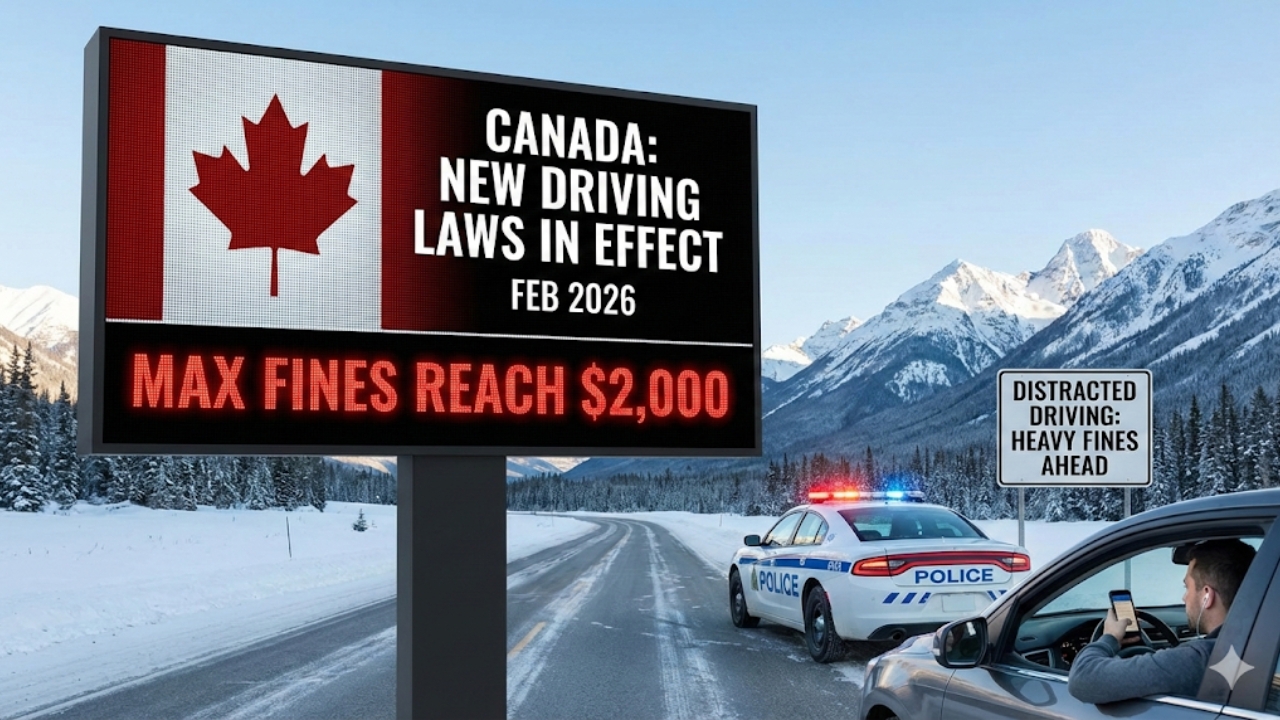
Canada’s roadways are entering a new era of stricter enforcement as February 2026 brings sweeping changes to driving regulations nationwide. These updates target dangerous habits like excessive speeding and phone use behind the wheel, with fines climbing as high as $2,000 for the worst violations. Provincial authorities have synchronized their systems to ensure no one slips through the cracks, making compliance a must for every driver.
Harsher Fines for Speed Demons
Excessive speeding now carries the heaviest punch under these rules. Going 40 km/h or more over the limit, especially near schools or homes, triggers the top $2,000 penalty right away. Cops can seize your car on the spot for up to 14 days and slap on six to seven demerit points, which often lead to license suspension. Officials say this targets urban hot spots where aggressive acceleration has spiked crash rates in recent years.
Distracted Driving Crackdown
Texting or scrolling while driving faces equal heat, with repeat offenders staring down $2,000 fines and mandatory suspensions. First-timers might get off lighter, but the message is firm: hands-free only, or pay big. Provinces are rolling out more automated cameras to catch these moments, linking directly to national databases for swift action. This shift aims to cut the thousands of collisions tied to distractions each year.
School Bus and Stunt Penalties
Ignoring a school bus’s stop arm? That’s now a $2,000 hit plus demerit points, protecting kids in the crossfire. Stunt driving, like burnouts or street racing, jumps even higher to $10,000 fines and longer impounds. These measures build on Vision Zero goals, pushing for zero road deaths through tough love rather than warnings. Drivers in high-risk areas will notice more patrols starting this month.
Key Penalty Breakdown
Here’s a quick look at the updated fines and extras taking effect:
| Offense | Max Fine (2026) | Extra Penalties |
|---|---|---|
| Excessive Speeding | $2,000 | 6-7 Demerit Points, Impound |
| Distracted Driving | $2,000 | Suspension (Repeat) |
| School Bus Violation | $2,000 | 6 Demerit Points |
| Stunt Driving | $10,000 | 14-Day Impoundment |
Tech and Enforcement Boost
New laws lean on shared provincial databases, so a ticket in Ontario flags you in British Columbia instantly. Expect roadside checks with speed guns and phone detectors everywhere from highways to city streets. Insurance companies are already factoring these in, hiking rates for violators. This nationwide net closes loopholes that let risky drivers keep going unchecked.
Why Now? Road Safety Stats
Canada saw a 15% jump in speed-related crashes last year, prompting this overhaul. Urban centers like Toronto and Vancouver led the surge, with fatalities up despite past efforts. Governments stress deterrence over dollars—the fines fund safety programs, not budgets. Everyday drivers who follow rules have little to fear, but thrill-seekers face real pain.
Tips for Smooth Sailing
Stay alert by mounting your phone on a dash holder and using voice commands. Double-check speeds in zones, and teach passengers to call out risks. Renew your license early if points loom, and apps from provinces track demerits live. These habits keep fines at bay and roads safer for families.
Long-Term Road Ahead
By summer, early data should show fewer wrecks if the fines bite. Critics worry about over-policing, but backers point to lives saved. As Canada drives into 2026, responsibility starts with the wheel-turner. Buckle up, slow down, and focus—the law won’t blink.
FAQs
Q: Do these fines apply everywhere in Canada?
A: Yes, all provinces enforce them uniformly from February 2026.
Q: Can I fight a $2,000 ticket?
A: Yes, appeal through your provincial court with evidence.
Q: Will insurance go up?
A: Likely for violators, as records sync nationwide.
Disclaimer
The content is intended for informational purposes only. You can check the official sources; our aim is to provide accurate information to all users.