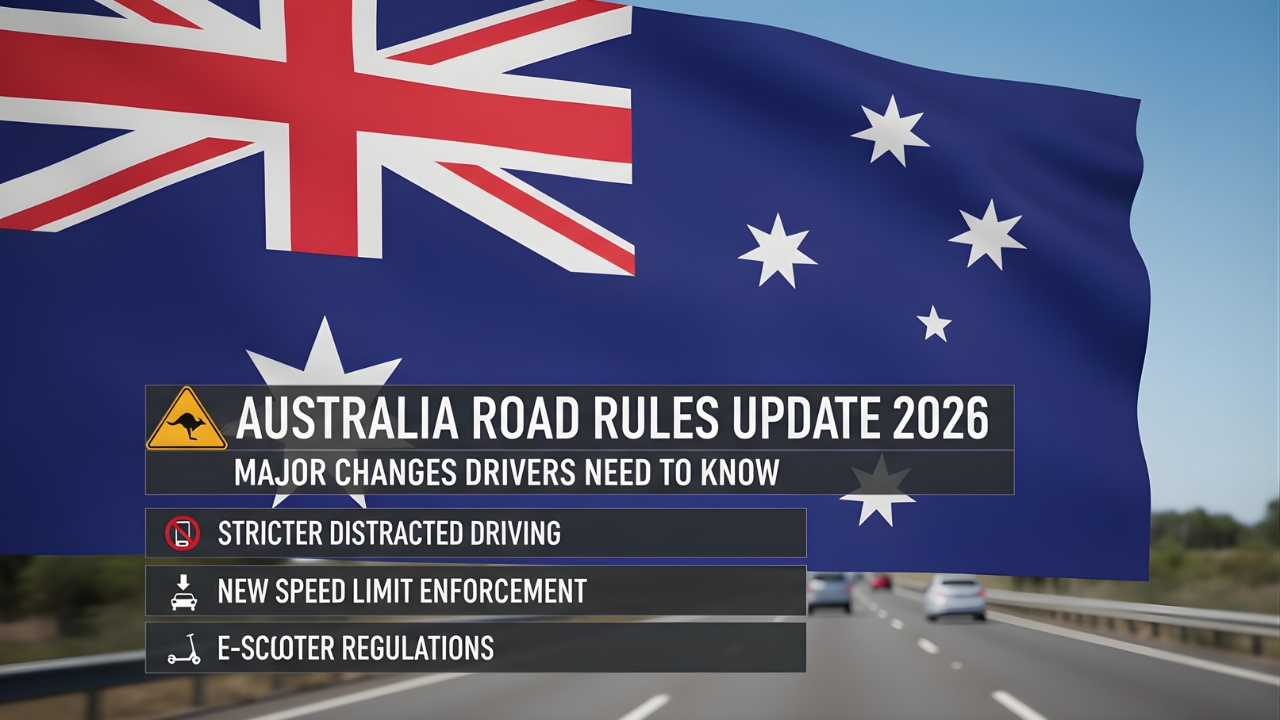
By 2026, the Australian drivers are about to encounter an era of technological revolution in enforcement of road safety. With the national approach of Towards Zero, state governments have shifted toward the non-technological use of warnings to the high-tech, AI-heavy implementation web. This year will be the theme of Zero Tolerance, and it specifically looks at the removal of driver distraction and safeguarding the road side workers. Travelling across the CBD of Sydney in the morning, or sightseeing the Great Ocean Road, the information sharing across borders is now being integrated such that in the instance of demerit and license suspension, the driver is now instantly followed through every state and territory boundary.
AI Enforcement: The Death of Sneaky Cameras
The radical transformation which will occur to 2026 will be the rollout of AI-powered camera systems across the country. Not only is there a clock speed increase, but high-definition systems have sophisticated algorithms to identify violations of seatbelts like a passenger with a strap under an arm and illegal mobile phone interaction. One of the differences this year is the zero-touch policy. In case a camera records you touching a telephone, even when it is in a cradle or you are at a red light, you are likely to receive a fine. Law enforcers have stated that the use of a map check or a song change has ceased to be a legitimate defense in court of law.
Enlarged Move over Laws in the interest of Road security
The expansion of the so-called slow down and move over rule is one of the most important updates that will fully happen in the year 2026. In the past, this law was mostly used to safeguard emergency vehicles such as police vehicles and ambulances. The rule in such states as New South Wales, Victoria and Queensland now regards a greatly expanded scope of road side workers. Drivers are now required to slow down to 40km/h (or 25km/h in South Australia) on the passing by of stationary tow trucks and breakdown vans (including NRMA or RACV) and highway maintenance vehicles with flashing lights. Breach of these safe zones may carry with it a fine of over $1,000 immediately.
Tightening of the licensing of elderly and foreign drivers
2026 presents a more stringent national framework of medical review and older motorists. The people of age 75 and above will have to undergo annual medical examinations to continue with their licenses. In some jurisdictions those over 80 years are now required to take a practical driving test after every two years. The overseas driver substitution of the easy swap is no longer there as well. List B countries (such as South Korea and South Africa) that have already used the former bypass to local tests are now required to complete both a Computer-Based Knowledge Test and Hazard Perception Test within half a year of arrival in order to obtain an Australian license.
The Rise of 30 km/h Urban Zones
There will also be a major change in terms of signage within the suburban hubs and school resource areas that the drivers will notice this year. It has been followed by successful pilots that numerous 40 km/h zones are since being lowered to 30km/h in high-pedestrian urban centers to lessen the intensity of accidents. Some have claimed that this is a revenue grab but the safety experts cite data that the survival rate of a pedestrian is far much more effective at slower speeds. These safe speed precincts have allowed the local councils to have increased authority to carry out the precincts and it is therefore essential to have a keen eye on signage in known neighbourhoods.
Digital-First Licensed and Responsible
Physical plastic cards are still being issued, but 2026 is the year when Australia is officially committed to the Digital Driver’s Licence (DDL). Apps of state government have now become the first line of the truth of law enforcement and a new ISO-based structure makes it possible to verify across borders. A big legal change: a dead phone battery does not qualify as an acceptable failure to issue a license. In case you only use your digital version, it means that it is your obligation to make sure that your device is recharged and working at the moment of a road side stop.
2026 Australian Traffic Penalty Snapshot
| Violation Type | Typical Fine (AUD) | Demerit Points |
| Illegal Mobile Phone Use | $423 – $1,250 | 3 – 4 Points |
| Passing Roadside Workers | Up to $1,000 | Varies by State |
| Seatbelt Offence (AI detected) | $574+ | 3 Points |
| Speeding (School/30km Zone) | $1,100+ | 5 – 7 Points |
Frequently Asked Questions (FAQs)
1. Is it possible to use my phone as a navigation?
Phone navigations are open to full license holders only after it is mounted on the commercial mount and is used through voice control. When the engine is on, you must not in any way come into contact with the device.
2. What will happen should a fine be imposed upon me in a different state?
In the national data-sharing agreement 2026 all fines and demerit points will be instantly shared between states. When you are suspended in one jurisdiction you now have an automatic block to your license countrywide.
3. Do I necessarily require a check up annually at 75 years old onwards?
Yes. The new national system demands yearly health examinations at the age of 75 (and in certain states 80) to ensure that vision and intellectual abilities are safe.
Disclaimer
The information is not meant to be used in any other way than information purposes you can also refer to the officially sources at the National Transport Commission (NTC) or your state of transport authority (e.g., Transport for NSW) and our intention is to present everybody with the correct information.