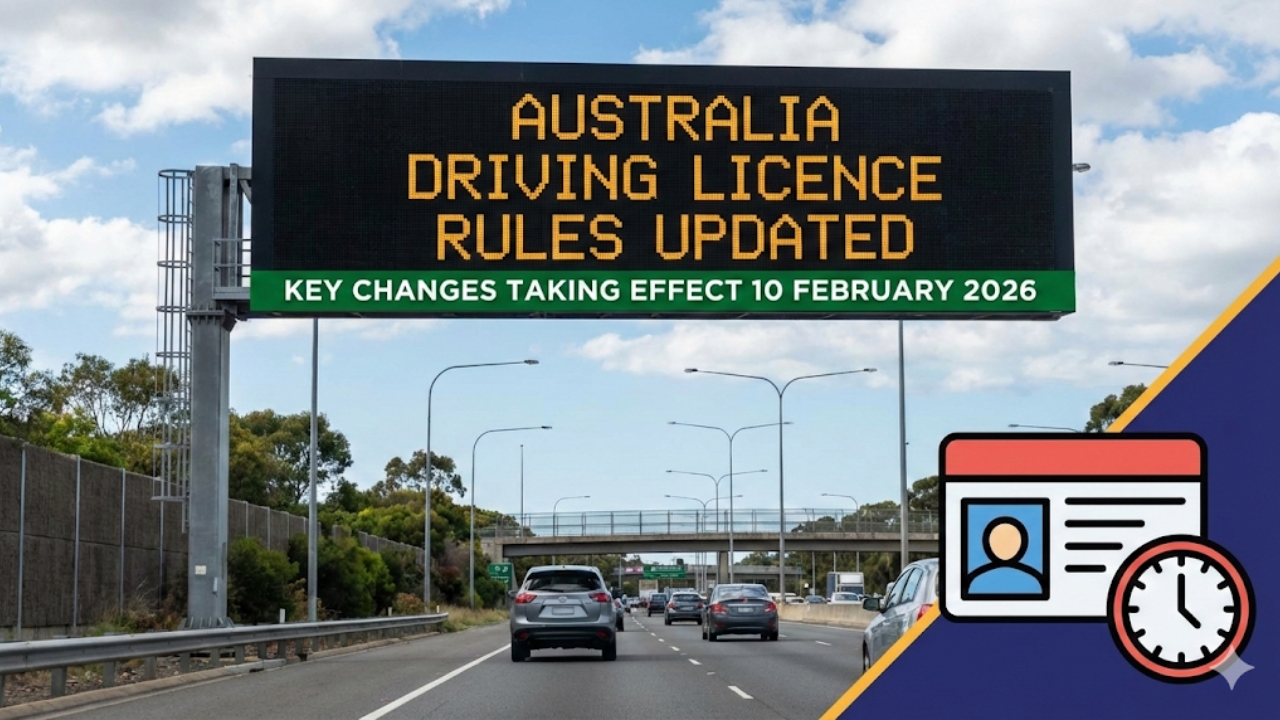
Australia’s driving licence rules are undergoing significant updates, with key changes set to take effect on 10 February 2026. These reforms aim to boost road safety by tightening requirements for both new and experienced drivers across states like New South Wales, Victoria, and Queensland. Drivers need to prepare now to avoid disruptions.
Closure of Licence Swap Loophole
The biggest shift involves ending the Experienced Driver Recognition program nationwide. Previously, holders of licences from 16 specific countries could swap them directly without tests if they were over 25. From 10 February, this easy pathway closes completely, forcing applicants from places like South Africa, Taiwan, and several European nations to pass a full theory test and practical driving assessment. This move addresses safety concerns, as overseas experience often doesn’t match Australia’s unique road conditions, such as roundabouts and speed zones. Local driving schools report a surge in bookings already, with wait times stretching weeks ahead.
Impact on Interstate and Overseas Drivers
Interstate licence conversions face stricter scrutiny too. While some mutual recognition still applies between states, the new rules mandate proof of at least three years’ driving history plus a vision test for all transfers. Overseas drivers not on the old exemption list always needed tests, but now everyone starts on equal footing, treated as novices until proven competent. This levels the playing field but catches many off guard, especially migrants arriving post-deadline. Authorities urge checking state transport websites immediately to plan ahead.
New Fine Structure and Penalties
Penalties for licence violations ramp up sharply. Breaches like driving on an expired provisional licence now carry fines up to AUD 1,500, with instant suspension possible for repeat offenders. Learner drivers caught unsupervised face double demerit points, escalating to licence cancellation after just two incidents. These measures target risky behaviour head-on, building on 2025’s road toll reductions. Police will enforce via random checks at major intersections starting the effective date.
| Change Category | Old Rule | New Rule (from 10 Feb 2026) | Affected Groups |
|---|---|---|---|
| Licence Swap | Direct exchange for 16 countries | Full theory + practical tests required | Overseas drivers aged 25+ |
| Interstate Transfer | Basic ID check | 3+ years experience + vision test | Moving between states |
| Provisional Fines | Up to AUD 800 | Up to AUD 1,500 + suspension | Learners and P-platers |
| Renewal for Seniors | Every 5-10 years | Annual medical self-assess for 75+ | Drivers over 75 |
| Demerit Points | 12-13 threshold | Instant review after 8 points | All full licence holders |
Stricter Rules for Learners and Provisional Drivers
Young drivers see tougher graduated licensing. Provisional P1 (red) holders must display plates for two full years, up from one, with zero blood alcohol tolerance enforced via breath tests at every stop. Mobile phone use in cars draws an immediate 50 demerit points, enough for suspension. These updates respond to data showing 20% higher crash rates among under-25s. Parents supervising learners must hold a full licence for five years minimum, closing another common loophole.
Senior Driver Adjustments
For those over 75, renewals demand annual medical declarations, with on-road assessments if conditions like dementia are flagged. Shorter licence terms—down to one year—apply based on health risks. This builds on trials in Queensland, where reassessments cut incidents by 15%. Retirees in rural areas, reliant on cars for shopping and medical trips, should book GP visits early to smooth the process.
Tech Integration and Enforcement Boost
Digital tools roll out alongside, with app-based licence checks and AI-monitored speed cameras linking directly to demerit systems. All states adopt a national database by February, flagging high-risk drivers instantly. This tech backbone ensures compliance but raises privacy debates among motoring groups. Expect more education campaigns via TV and social media in coming weeks.
Preparation Steps for Drivers
Act fast: gather documents, book tests, and update insurance. Visit Service NSW, VicRoads, or equivalent sites for personalised checklists. Driving instructors recommend practice runs focusing on hazard perception, a key test component. These changes promise safer roads long-term, though short-term queues loom large.
FAQs
Q: Which countries lose swap rights?
A: Bulgaria, Cyprus, Czech Republic, Estonia, Hungary, Latvia, Lithuania, Poland, Serbia, Romania, Slovakia, Slovenia, South Africa, South Korea, Taiwan, and Hong Kong (12+ months).
Q: Do these apply nationwide?
A: Yes, harmonised across all states and territories from 10 February 2026.
Q: How to appeal a suspension?
A: Lodge via your state tribunal within 28 days, with medical or character evidence.
Disclaimer
The content is intended for informational purposes only. You can check the official sources; our aim is to provide accurate information to all users.