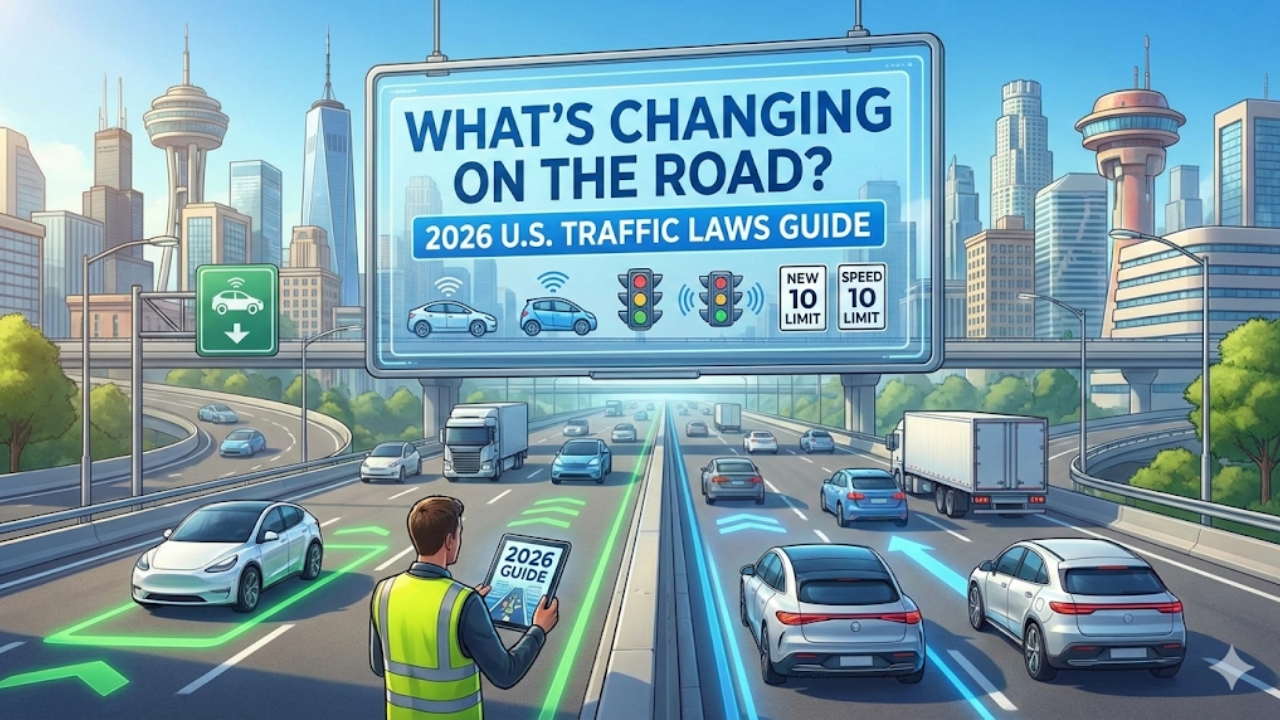
Road safety in the United States is evolving rapidly as 2026 brings a wave of new traffic regulations aimed at reducing accidents, curbing distracted driving, and embracing technology. These changes, driven by federal guidelines and state-specific laws, focus on stricter enforcement through automation and smarter infrastructure. Drivers nationwide need to adapt quickly to avoid hefty fines, license points, or even vehicle impoundments.
Automated Enforcement Takes Center Stage
Starting early 2026, many states roll out advanced camera systems that detect violations without officer intervention. Real-time insurance checks via license plate scanners will flag uninsured drivers instantly, leading to tickets mailed directly to your home. Average speed monitoring zones on highways calculate your pace over miles, not just snapshots, making it harder to evade speed traps.
Cell phone detection cameras represent a game-changer, spotting drivers holding devices even through tinted windows using AI-powered imaging. In California and expanding to others, these systems issue fines up to $500 for first offenses. Pair this with roadside emission sensors that passively scan exhaust for compliance, and non-green vehicles could face immediate registration holds.
Key State-Specific Updates
California leads with lowered school zone speeds dropping to 20 mph by 2031, though preparatory signage starts now, alongside expanded “Slow Down, Move Over” rules for all hazard-light vehicles. Louisiana’s “touch” law bans any phone handling, with 31 states adopting similar hands-free mandates by mid-year—fines climb to $300 on repeats.
License plate obscuring now carries federal-level penalties up to $1,000 and jail time in high-risk areas. Autonomous vehicle markers become mandatory, glowing to signal self-driving mode, helping human drivers react faster. Off-highway electric motorcycles must display DMV placards, aligning them with standard OHV rules.
Fine and Penalty Breakdown
Here’s a quick look at potential costs under the new rules:
| Violation Type | First Offense Fine | Repeat Offense Fine | Additional Risks |
|---|---|---|---|
| Phone Use (Touch Law) | $100-$250 | $300+ | License suspension |
| Speed Camera Ticket | $150-$400 | $500+ | Points, insurance hike |
| Insurance Non-Compliance | $200-$500 | $1,000+ | Registration block |
| Emission Failure | $250 | $750+ | Vehicle impound |
| Plate Obstruction | $500 | $1,000+ jail | Criminal record |
This table highlights why proactive compliance pays off, as automated systems leave little room for excuses.
Tech Mandates for Vehicles
Event data recorders (EDRs) must now sync with state databases in 20 states, capturing speed, braking, and seatbelt use during crashes for insurance and legal reviews. DUI offenders get a two-week grace for interlock inspections, but breath device tampering triggers instant revocation. Bicycle signal knowledge becomes a licensing staple, testing turns and stops.
Red light systems upgrade with longer yellow phases in urban zones, cutting illegal crossings by 15% in pilots. High-risk drivers face preemptive restrictions, like nighttime limits, based on prior records pulled from national databases.
How to Stay Compliant
Preparation starts with a vehicle audit: verify insurance digital linkage, install compliant EDRs if required, and sheath your phone in a locked console. Apps from AAA and state DMVs simulate camera zones, while over-the-air updates handle AV lamps. Renewals now include emission pre-checks online, dodging roadside surprises.
Community workshops in February 2026 offer free scans, and fleet operators must train on average-speed math. Adjust habits now—hands at 9 and 3, eyes forward—and save thousands in avoided penalties.
Impact on Daily Drivers
These laws promise fewer fatalities, with projections of 10% drop in distraction crashes alone. Insurance rates may stabilize for compliant drivers, but lapses spike premiums 30%. Rural roads gain sensors too, leveling enforcement nationwide.
President Trump’s infrastructure push funds much of this, blending safety with economic boosts via tech jobs.
Preparing for the Long Haul
Long-term, expect integration with smart cities: V2V communication warns of hazards ahead. Annual DMV apps track your compliance score, unlocking discounts. Stay vigilant—the road ahead is safer but demands attention.
FAQs
Q: Do all states enforce phone detection cameras in 2026?
A: No, but 15+ states start pilots, expanding federally by 2027.
Q: What if I get a false camera ticket?
A: Appeal online with dashcam proof within 30 days—success rate over 20%.
Q: Are EVs exempt from emission checks?
A: Yes, fully electric qualify automatically.
Disclaimer
The content is intended for informational purposes only. You can check the official sources; our aim is to provide accurate information to all users.