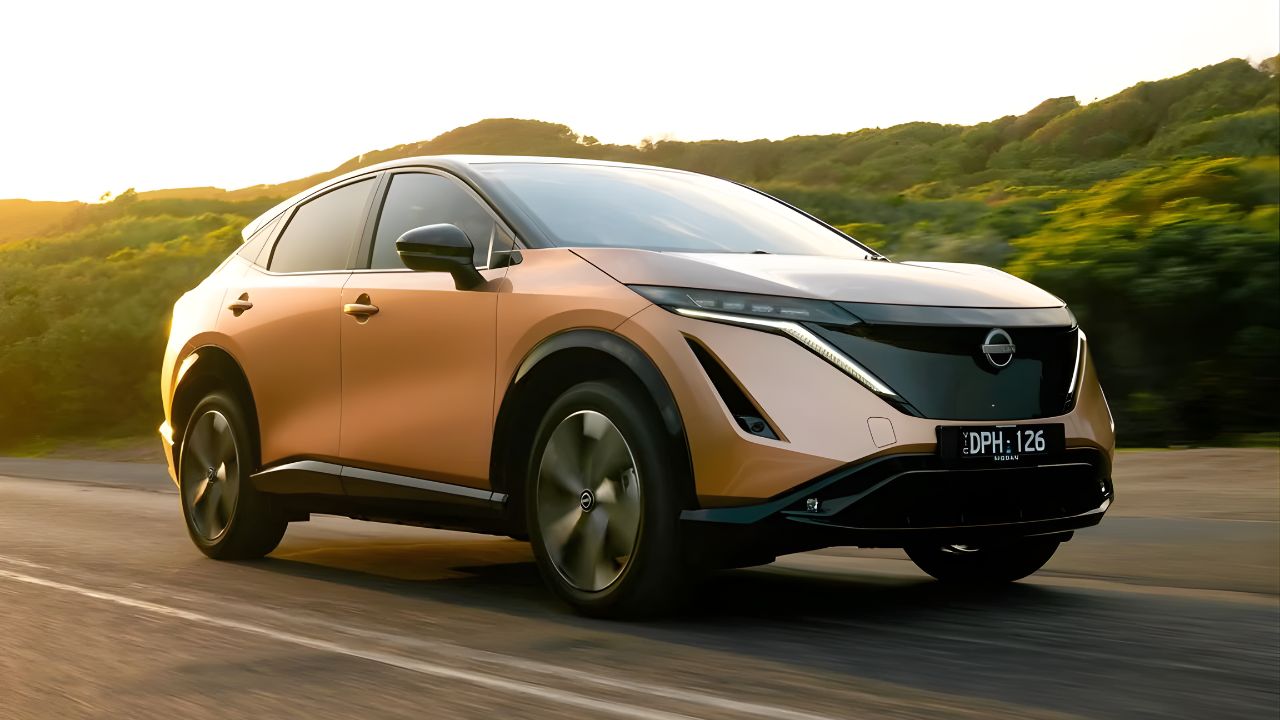
The 2026 Nissan Ariya arrives as a refined evolution of the brand’s flagship electric crossover, blending “Timeless Japanese Futurism” with substantial technical upgrades. For the 2026 model year, Nissan has focused on addressing user feedback by enhancing the ride quality and modernizing the digital experience. While the silhouette remains familiar, the subtle aesthetic tweaks and the inclusion of a more robust infotainment system signal Nissan’s intent to remain competitive in an increasingly crowded EV market. This review explores how these changes translate to the road and whether the Ariya maintains its status as a premium, comfort-oriented electric vehicle.
A Minimalist Design Refresh
The exterior of the 2026 Ariya undergoes a “minimalist” facelift that streamlines its appearance. The most notable change is at the front, where the large black “shield” panel has been replaced with a smoother, body-colored surface, giving it a cleaner and more integrated look. New lighting signatures, including curved daytime running lights with a three-stripe pattern, modernize the face of the vehicle. These changes aren’t just for show; the removal of certain side intakes and a more cohesive profile help maintain the Ariya’s impressive aerodynamic efficiency, which is critical for maximizing highway range and reducing wind noise.
Elevating Interior Comfort and Tech
Inside the cabin, the 2026 model retains its “lounge-like” atmosphere but introduces a major shift in technology. Nissan has moved away from its proprietary NissanConnect system in favor of a new Google-powered infotainment platform. This provides native access to Google Maps, Google Assistant, and the Play Store, significantly improving responsiveness and navigation accuracy. Another practical addition for 2026 is the Vehicle-to-Load (V2L) capability, allowing the Ariya to function as a mobile power bank for external devices. The revised center console now offers better ergonomics, though it keeps the signature power-sliding functionality that owners have praised for its versatility.
Performance and Powertrain Diversity
Nissan continues to offer a wide array of powertrain configurations to suit different driving needs. The entry-level front-wheel-drive (FWD) models provide a balanced 214 to 238 horsepower, focusing on efficiency and urban commuting. For those seeking more spirit, the e-4ORCE dual-motor all-wheel-drive (AWD) variants deliver up to 389 horsepower and 442 lb-ft of torque. This system is particularly impressive for its “pitch control,” which uses regenerative braking from both motors to keep the car level during acceleration and braking, resulting in a smoother ride for passengers who might otherwise feel nauseous from typical EV torque delivery.
2026 Nissan Ariya Technical Specifications
| Feature | 66 kWh Battery (Standard) | 91 kWh Battery (Extended Range) |
| Max Horsepower | 214 hp (FWD) / 335 hp (AWD) | 238 hp (FWD) / 389 hp (AWD) |
| 0-60 mph (AWD) | ~5.1 Seconds | ~4.8 Seconds |
| Charging (10-80% DC) | 35 Minutes | 40 Minutes |
| V2L Support | Yes | Yes |
| Infotainment | Google Built-in | Google Built-in |
| Cargo Space | Up to 59.7 cu ft | Up to 59.7 cu ft |
Battery Capacity and Real-World Range
The battery options for 2026 remain centered around the 66 kWh and 91 kWh (gross) packs. While official EPA estimates often hover near 300 miles for the FWD extended-range model, real-world highway driving at 70 mph typically yields between 240 and 260 miles depending on wheel size. The 20-inch wheels, while stylish, do create more rolling resistance and can shave roughly 10% off the total range compared to the 19-inch options. Owners in colder climates should expect a further reduction in range, though the liquid-cooled thermal management system helps mitigate the worst effects of winter on battery chemistry.
Driving Dynamics and Refinement
One of the most significant mechanical updates for 2026 is the revised suspension tuning. Early Ariya models were occasionally criticized for feeling a bit firm on choppy urban surfaces. Nissan has responded by tweaking the spring rates and dampers to provide a more cushioned feel without sacrificing stability. The steering remains light and effortless, making the Ariya one of the easier SUVs to maneuver in tight parking garages. Furthermore, the inclusion of ProPILOT Assist 2.0 on higher trims allows for hands-off highway driving on compatible roads, making long-distance journeys considerably less taxing for the driver.
Final Verdict: Is it Worth it?
The 2026 Nissan Ariya stands out as a sophisticated choice for those who value interior ambiance and ride comfort over raw performance metrics. It doesn’t try to be a sports car; instead, it excels at being a serene, high-tech sanctuary. The move to a Google-based ecosystem solves one of the previous model’s biggest pain points, and the exterior refresh keeps it looking contemporary against rivals like the Hyundai IONIQ 5 and Tesla Model Y. While it lacks the ultra-fast 800V charging found in some competitors, its consistent charging curve and premium build quality make it a strong contender in the premium EV segment.
FAQs
Q1 What is the real-world range of the 2026 Nissan Ariya?
While the maximum estimated range is roughly 300 miles, real-world highway usage typically falls between 240 and 270 miles for the 91 kWh battery, depending on driving style and weather.
Q2 Does the 2026 Ariya support one-pedal driving?
The Ariya features Nissan’s “e-Pedal Step,” which provides significant regenerative braking to slow the vehicle down to a crawl, though it may require a light tap on the brake pedal to come to a complete, permanent stop.
Q3 What is new in the 2026 Ariya interior?
The biggest change is the Google-powered infotainment system with native apps, alongside new Vehicle-to-Load (V2L) power outlets and a revised center console design for better storage.
Disclaimer
The content is intended for informational purposes only. you can check the officially sources our aim is to provide accurate information to all users.